Key Takeaway: Taking the Vientiane to Luang Prabang train cuts a grueling 10-hour bus journey down to a smooth 1 hour and 50 minutes. Second-class EMU tickets cost around $22 USD and offer the best balance of comfort and value. To guarantee your seat before official station windows sell out, book your train tickets online a few weeks in advance.
Ten years ago, getting between Laos’s capital and its ancient royal city meant surviving a spine-rattling ten-hour minivan ride. It was exhausting. Today, you glide through those same limestone peaks in just under two hours. The difference is staggering. If you are planning this journey, understanding the Vientiane to Luang Prabang Train: Tickets & Schedule is your first step. But the new Laos-China Railway (LCR) operates a bit differently than rail networks in Europe or neighboring Thailand. You cannot just show up five minutes before departure. You need a plan.
The stations are massive. Security is tight. And tickets sell out incredibly fast. So, let us break down exactly how to navigate this route without the headaches.
Quick Overview of the Vientiane to Luang Prabang Train Journey
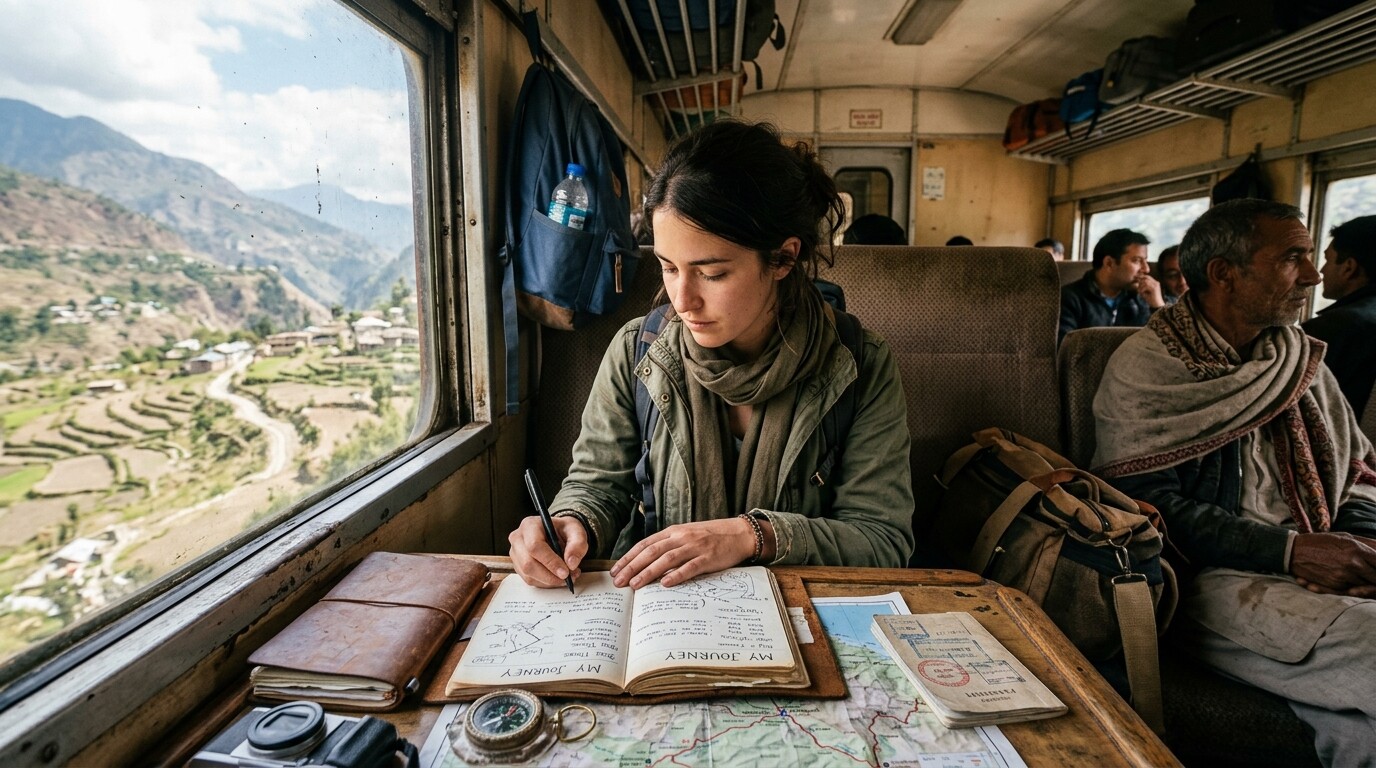
Before getting into the weeds of schedules and seat classes, here are the baseline facts for the Vientiane to Luang Prabang route.
- Distance: Roughly 238 miles (383 km) of track.
- Duration: 1 hour 50 minutes on the high-speed EMU trains, or 2 hours 30 minutes on the standard train.
- Train Types: Sleek red-and-white-and-blue CR200J EMU trains (often called "bullet trains" locally) and traditional green standard trains.
- Scenery: Spectacular. Expect dozens of long tunnels broken up by flashes of lush valleys, terraced farms, and remote villages.
- Punctuality: Excellent. According to the Vientiane Times, the railway maintains a strict on-time performance record.
Vientiane to Luang Prabang Train Schedule (2026)
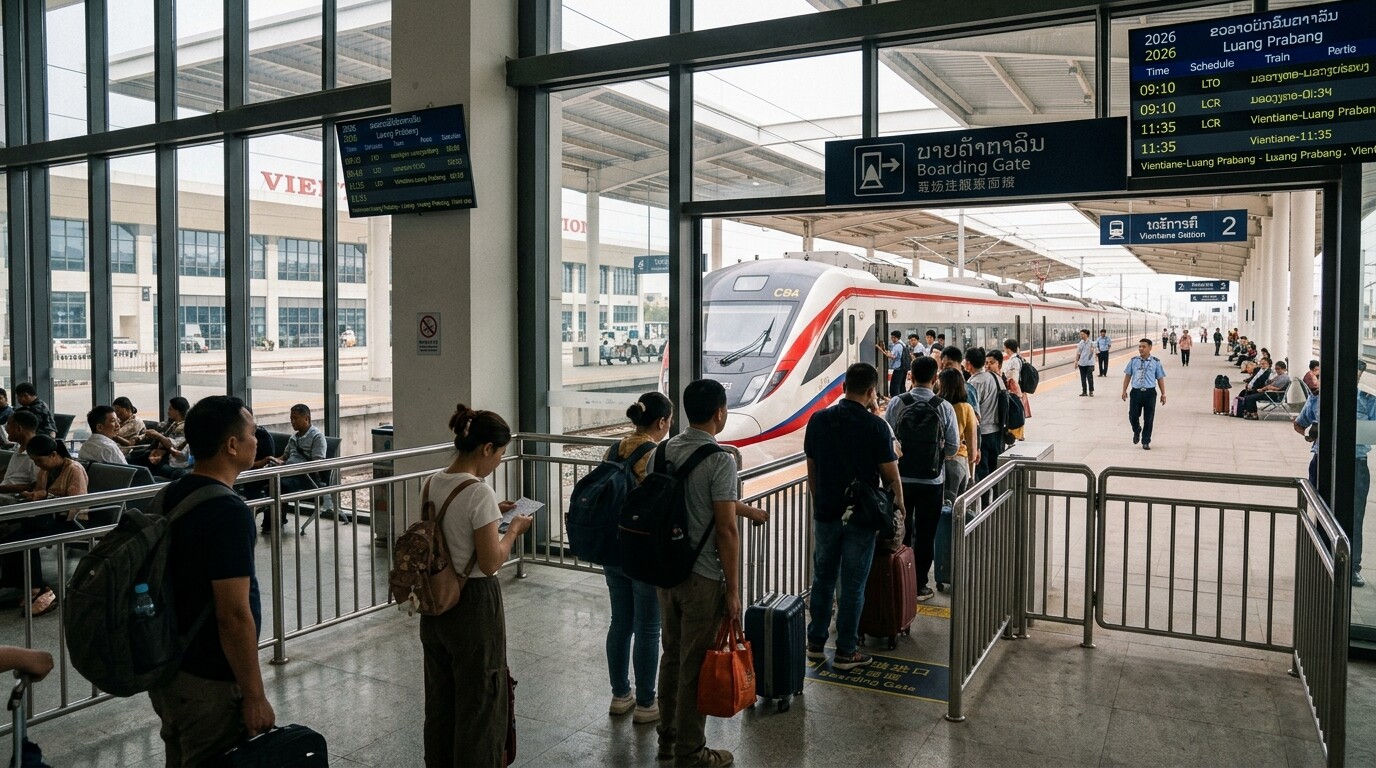
The timetable has expanded significantly since the railway first opened. We now see a reliable mix of morning, afternoon, and evening departures. The fastest Vientiane to Luang Prabang train completes the journey in exactly 1 hour and 50 minutes, with high-speed EMU trains departing four times daily in 2026. This gives you plenty of flexibility whether you want to arrive in time for lunch or catch a late afternoon ride after finishing business in the capital.
You will notice two main types of trains on the board. The "C" and "D" series are the high-speed Electric Multiple Units (EMU). They max out at 160 km/h. The "K" series is the ordinary train, which maxes out at 120 km/h. Honestly, the time difference is negligible. But the comfort levels vary. If you are reading any Introduction to Laos Railway guides, you will know the EMU is the crowd favorite.
Here is the current daily departure schedule. Times can occasionally shift by a few minutes, so always verify your specific date.
| Train Number | Type | Departs Vientiane | Arrives Luang Prabang | Duration | Action |
|---|---|---|---|---|---|
| C82 | EMU (High-Speed) | 07:30 | 09:20 | 1h 50m | Check Availability |
| C84 | EMU (High-Speed) | 10:45 | 12:35 | 1h 50m | Check Availability |
| K12 | Ordinary | 13:05 | 15:35 | 2h 30m | Check Availability |
| C86 | EMU (High-Speed) | 15:30 | 17:20 | 1h 50m | Check Availability |
| D88 | EMU (International) | 16:15 | 18:05 | 1h 50m | Check Availability |
That D88 train is actually the international service coming up from the border. Ever since International trains between Bangkok, Thailand and Vientiane, Laos have been opened, this route has seen a massive surge in transit passengers. You can absolutely book a domestic leg on this international train.
Ticket Prices and Seat Classes Explained
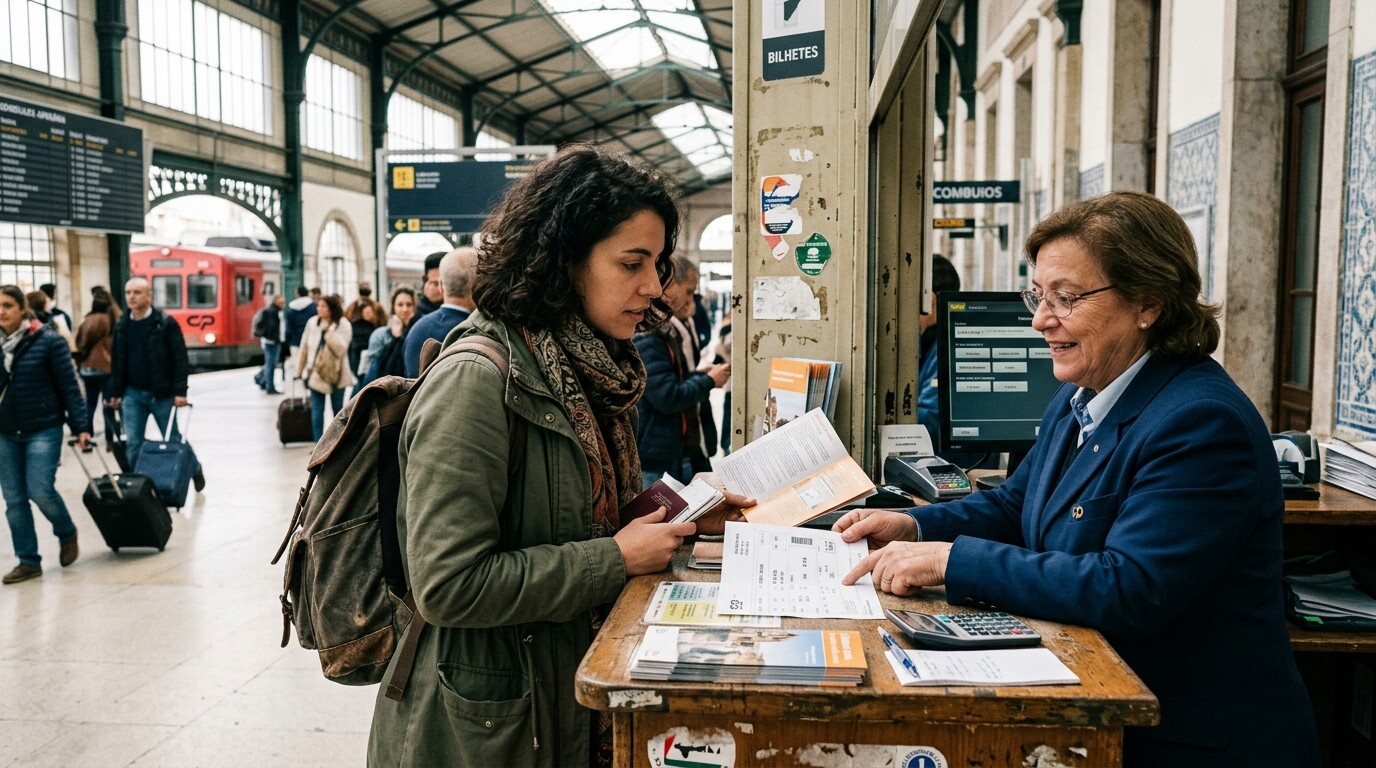
Laos train tickets are priced dynamically in Lao Kip (LAK), but for international travelers, thinking in US Dollars makes life easier. The exact price fluctuates slightly with the exchange rate. Second-class EMU tickets cost roughly $22 USD (depending on the exchange rate) and offer the best balance of comfort and value for the two-hour trip.
Let us look at what you actually get for your money. First Class on the EMU features wide, plush seats in a 2+2 configuration. They recline deeply. You get power outlets at every seat and a quieter cabin. Second Class uses a 3+2 configuration. It feels very much like an economy flight, but with significantly more legroom. The ordinary K-train only offers standard hard seats. They are perfectly fine for a two-hour ride, but they lack the polish of the EMU.
If you are familiar with the older networks in Southeast Asia, this is a massive upgrade. You can read an Introduction to Seat Types on Thai Trains to see the contrast; the Laos network is entirely modern.
| Seat Class | Train Type | Est. Price (LAK) | Est. Price (USD) | Best For | Booking Link |
|---|---|---|---|---|---|
| First Class | EMU | 650,000 LAK | $32 USD | Extra legroom, quiet travel | Book First Class |
| Second Class | EMU | 450,000 LAK | $22 USD | Budget travelers, general comfort | Book Second Class |
| Standard Seat | Ordinary (K) | 320,000 LAK | $16 USD | Backpackers, saving money | Book Standard |
Do not wait until the day of travel to decide. To lock in these rates and guarantee a spot, check the latest prices on laostrain.com a few weeks before your trip.
What to Expect on Board the Vientiane to Luang Prabang Train
If you have never ridden the Laos-China Railway, you might be wondering about the onboard facilities. The experience is highly standardized and very comfortable. The EMU trains are fully air-conditioned. In fact, the AC is notoriously strong, so bring a light jacket or sweater even if it is 95°F (35°C) outside.
Every train car features a digital display showing the current speed and upcoming stops. You will not find Wi-Fi on board, and mobile data signals drop frequently as the train passes through the dozens of tunnels along the route. Download your podcasts or movies before you leave your hotel.
For food and drink, do not expect a full dining car. A small trolley rolls through the aisles selling bottled water, instant coffee, and basic snacks like chips and biscuits. However, every car is equipped with a hot water dispenser. Many locals bring their own instant noodles and make a quick meal during the ride. Restrooms are located at the end of each car, offering a mix of Western-style seated toilets and traditional Asian squat toilets. They are generally kept very clean throughout the journey.
How to Buy Train Tickets in Laos (Without Losing Your Mind)
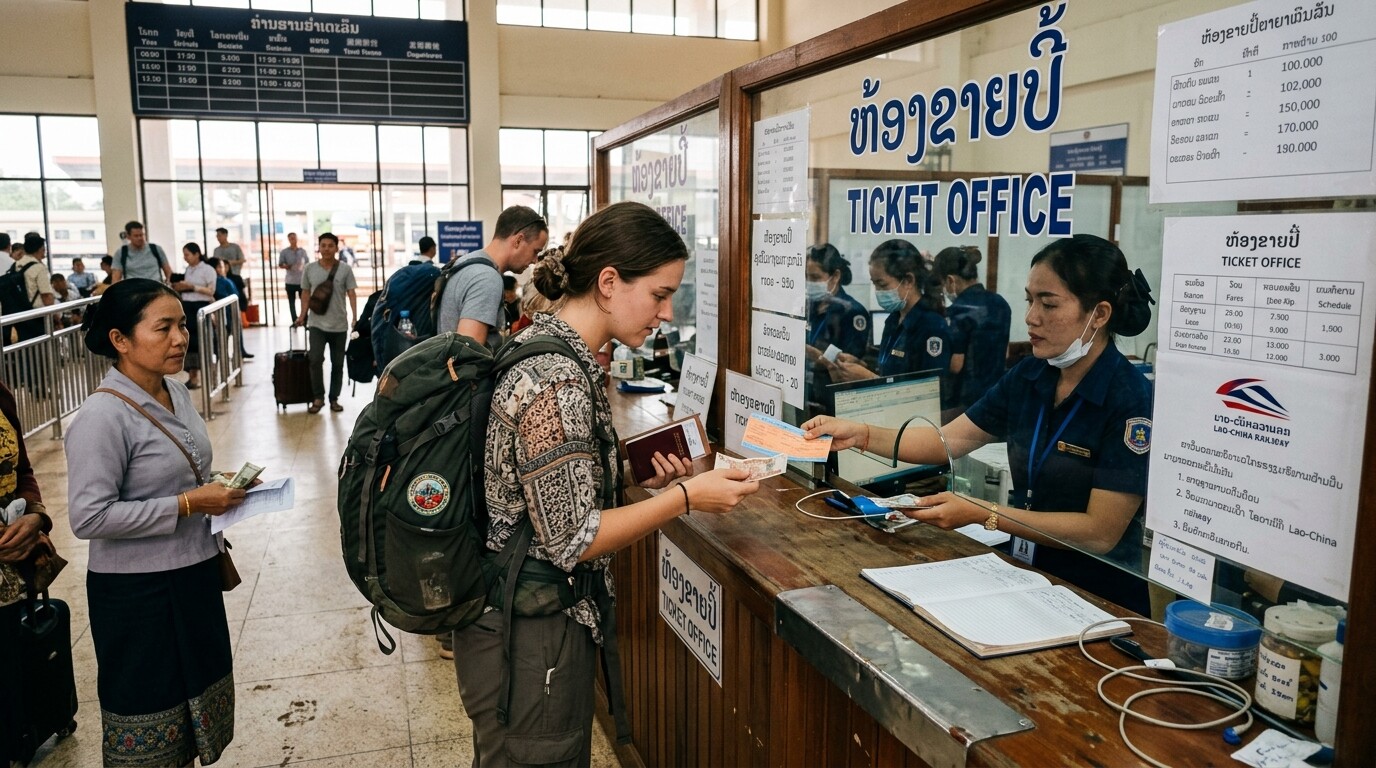
This is where things get tricky. The official ticketing system in Laos is heavily geared toward locals. You have three main options for getting a ticket, and two of them are highly frustrating for tourists.
Option one is going to the station. You must bring your physical passport. You must pay in cash (Lao Kip) or use a local QR payment app. And you will likely wait in a long line, only to find out the train you want is sold out. Option two is the LCR Ticket App. It exists, but it requires a local Lao phone number to register, and international credit cards frequently fail at checkout.
Option three is using an online booking agency. Because official ticket windows only open three days before departure and frequently sell out within hours, booking online in advance is the only way to guarantee your seat. Agencies purchase the ticket the second the official window opens on your behalf. They send you a QR code. You scan it at the gate. It is seamless.
We highly recommend you book train tickets online. The small service fee is entirely worth avoiding a wasted $15 tuk-tuk ride to the station just to be turned away.
The Station Experience in Vientiane and Luang Prabang
Do not expect quaint, colonial-era railway stops. The stations in Laos are colossal, modern, and built far outside the city centers. They operate much more like regional airports than traditional train stations.
Vientiane Railway Station sits about 15 kilometers northeast of the city center. A taxi or Loca (the local ride-hailing app) will take 30 to 45 minutes depending on traffic. In Luang Prabang, the station is about 12 kilometers out. Shared minivans wait for every arriving train, charging a flat fee of about 40,000 LAK per person to drop you at your guesthouse in the old town.
Once you arrive at the station, you face security. Passengers must arrive at Vientiane Railway Station at least one hour before departure, as ticket checks and airport-style security lines close strictly 15 minutes before the train leaves. Your bags will go through an X-ray machine. They will confiscate aerosols, large knives, and sometimes even seemingly harmless items like strong mosquito coils. Be prepared.
The waiting halls are massive and air-conditioned. You will find basic convenience stores and clean restrooms. When your train is called, everyone lines up, scans their QR code or paper ticket, and walks out to the platform. It is highly organized.
Getting from the Station to Luang Prabang City Center
Arriving in Luang Prabang requires a bit of logistical planning. The railway station was built in a valley about 12 kilometers outside the historic old town to protect the city's UNESCO World Heritage status. You cannot walk to your hotel.
When you exit the station, you will see a large parking lot filled with silver minivans. This is the official shuttle service. You buy a ticket at a small booth right outside the exit doors. The cost is typically 40,000 LAK (about $2 USD) per person. The drivers will wait until the minivan is completely full—usually 10 to 12 passengers—before departing. They will drop you off directly at your guesthouse or hotel in the city center.
If you prefer not to wait, you can hire a private taxi or use the Loca app, but expect to pay significantly more, often around 200,000 to 300,000 LAK. For most travelers, the shared minivan is the most efficient and cost-effective way to finish the trip.
7 Pro Tips for the Laos Railway
After riding this route dozens of times, I have learned a few things the hard way. Keep these tips in mind to make your 2026 rail journey flawless.
- Keep your passport handy. You need your physical passport to buy a ticket, to enter the station, and sometimes for a random check on the train. Do not bury it at the bottom of your backpack.
- Ditch the aerosols. The security scan will flag any aerosol cans. Deodorant sprays, shaving cream, and pressurized bug spray will be tossed in the bin. Bring roll-on or pump-spray alternatives.
- Pre-book your onward transport. When you arrive in Luang Prabang, the scramble for minivans can be chaotic. If your hotel offers a pickup, take it.
- Understand the luggage limits. Officially, you are allowed 20kg of luggage per person. In practice, they rarely weigh bags unless they look absurdly massive. But storage space on the EMU trains fills up fast. Board early to claim overhead space.
- Bring your own coffee. The train has a small cart selling water and snacks, but no dining car. If you want a decent breakfast, bring it from Vientiane. (For more on the train's amenities, a quick Introduction to China-Laos Railway will show you the layout).
- Check the international schedule. Since China-Laos Railway will operate an additional pair of international passenger trains from April 13, you have more options. These cross-border trains are often less crowded on the domestic legs.
- Book early. I cannot stress this enough. Tour groups buy up blocks of tickets instantly. Use a service to secure your Laos train tickets well before you arrive in the country.
Frequently Asked Questions
How long is the train ride from Vientiane to Luang Prabang?
The high-speed EMU train takes exactly 1 hour and 50 minutes to travel the 238-mile (383 km) route from Vientiane to Luang Prabang. This is a significant reduction from the ten-hour journey previously required by road.
How much do Vientiane to Luang Prabang train tickets cost?
A second-class EMU train ticket costs approximately $22 USD (around 480,000 LAK), offering the best balance of comfort and value for travelers. First-class and business-class seats are also available at higher price points for those seeking extra legroom.
Where can I book Vientiane to Luang Prabang train tickets?
Tickets can be purchased online through laostrain.com or at the Vientiane Railway Station ticket office, though online booking is recommended to secure seats before they sell out. Official station windows often have long queues and limited availability.
What is the Vientiane to Luang Prabang train schedule for 2026?
The 2026 schedule features four daily high-speed EMU departures and one standard train service, with morning trains typically starting around 7:30 AM. This frequency allows travelers to choose between early morning, midday, or late afternoon departures.
Is there a luggage limit on the Laos-China Railway?
The luggage allowance for passengers on the Vientiane to Luang Prabang train is strictly 20kg per person, with all items passing through airport-style security screening. Stations are massive and require time to navigate, so arriving at least 60 minutes before departure is advised.