Laos Train Seat Classes: Business, First & Second (2026)
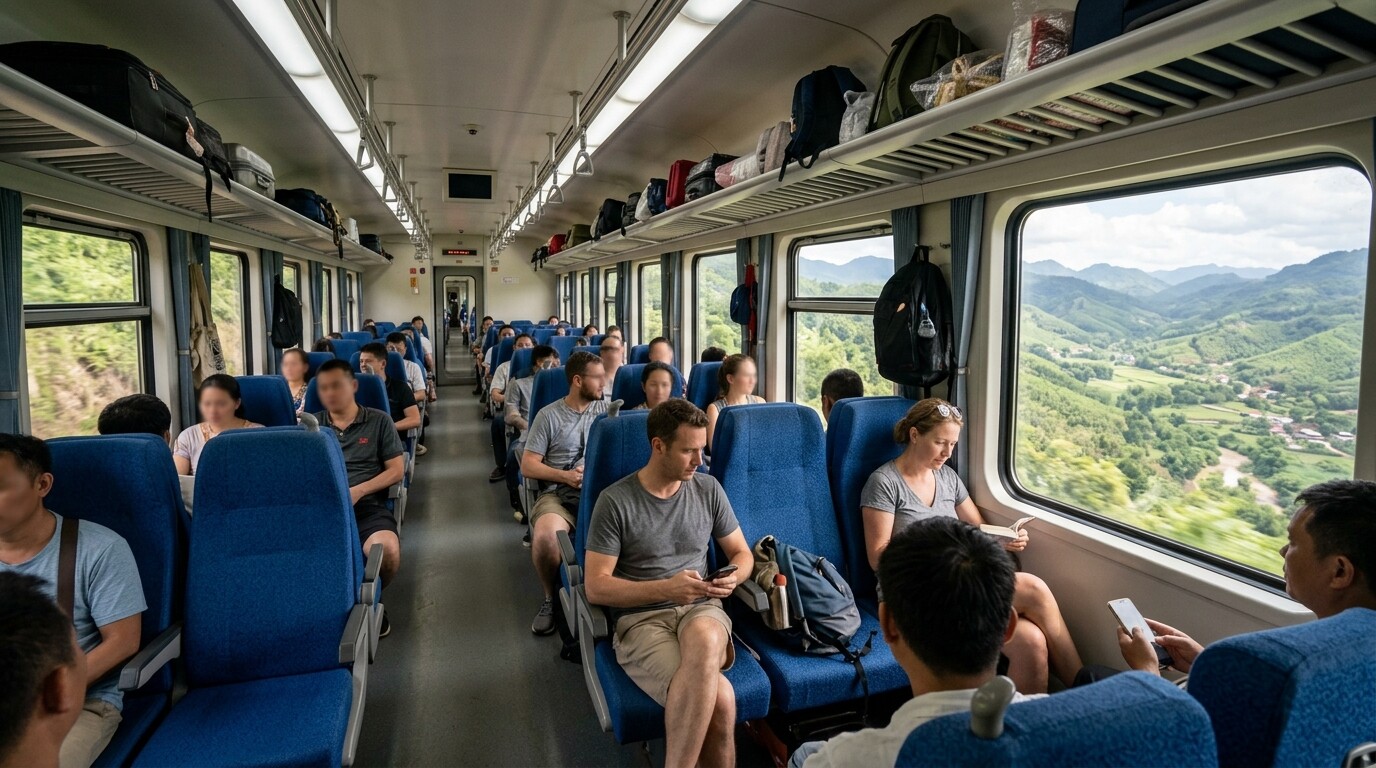
Key Takeaway: Second Class tickets from Vientiane to Luang Prabang cost roughly $18 for a crisp two-hour journey, offering the best value for most travelers. First Class gives you wider seats and dedicated armrests for about $25, while Business Class provides lie-flat luxury exclusively on international routes. Secure your preferred Laos train seat classes early by checking the latest 2026 schedules and booking online at laostrain.com.
Laos Train Seat Classes at a Glance
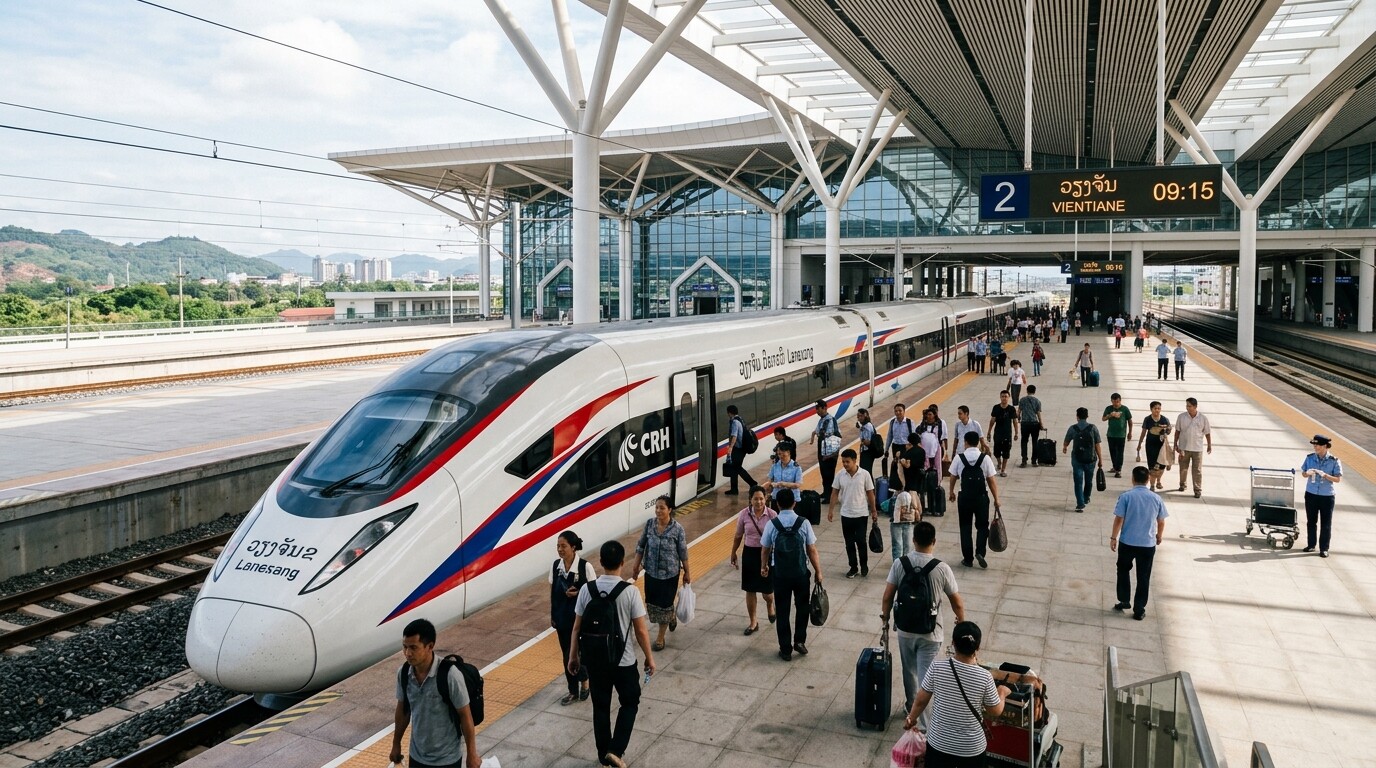
- Second Class: The standard 3+2 seating layout. It is cheap, clean, and perfectly adequate for shorter domestic hops.
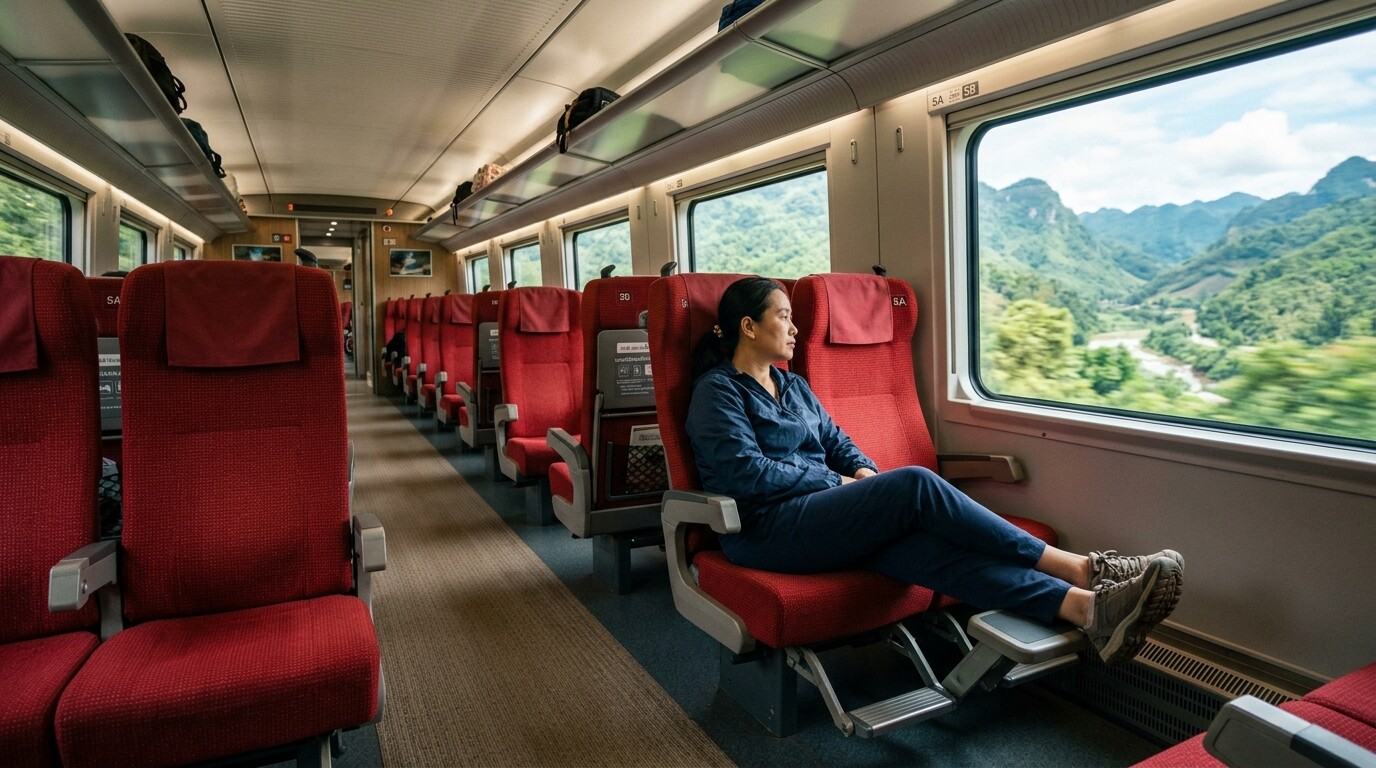
- First Class: The upgraded 2+2 seating layout. You get significantly wider seats and guaranteed armrests here.
- Business Class: The exclusive VIP pods. These premium lie-flat seats operate almost exclusively on cross-border international routes.
Second Class: The Budget-Friendly Workhorse
Walk into carriage number six. You will immediately notice the bright blue rows stretching all the way down the long aisle. As one of the most popular Laos train seat classes, Second Class on the Laos-China Railway features a 3+2 seating configuration with generous legroom, making it the most cost-effective choice for trips under three hours. It honestly puts most domestic airlines to shame. The generous seat pitch allows a surprisingly tall adult to stretch their legs out quite comfortably. But you do have to deal with the dreaded middle seat. If you end up in the 'B' seat, you share armrests with two total strangers. That can get slightly annoying on longer journeys up to Boten. Still, the tray tables are incredibly sturdy and the cabin is kept spotlessly clean. For a quick hop to Vang Vieng, this is one of the most efficient train seat classes in Laos. You will find a small digital display showing the train's speed at the end of the car. According to recent infrastructure reports from Xinhua News, these trains comfortably cruise at 160 km/h through the mountainous terrain. To secure a window spot, book your train tickets online well in advance. Read more about the Introduction to Laos Railway if you want the historical backstory of this massive engineering project.First Class: Extra Width and Quieter Carriages
| Feature | Second Class | First Class | Booking |
|---|---|---|---|
| Seating Layout | 3 + 2 (Blue Seats) | 2 + 2 (Red Seats) | Book Now |
| Estimated Price (Vientiane-Luang Prabang) | ~$18 USD | ~$25 USD | Book Now |
| Power Outlets | Under the seats (shared) | Between the seats (dedicated) | Book Now |
| Best For | Budget travelers and short hops | Couples, remote workers, and quiet seekers | Book Now |
Business Class: Lie-Flat Luxury on Rails
For those seeking the pinnacle of Laos train seat classes, true luxury exists on these rails. You just have to know exactly which specific train to catch. Business Class offers fully reclining lie-flat pods and complimentary snacks, though these seats are exclusively available on select international routes to China. The cabin feels exactly like a private jet interior. You get massive curved privacy shells wrapped around plush, cream-colored leather seating. The train attendant brings you a box of snacks right after departure. Slippers are provided in a small plastic pouch for your comfort. While it is the most expensive of the Laos train classes, you won't find these premium seats on the standard domestic runs between local cities. They are strictly reserved for the cross-border journeys heading north into Yunnan province. If you want this high-end experience, look into the Vientiane to Kunming Train: Schedules, Prices & Booking (2026). Regional travel is booming right now. Recently, International trains between Bangkok, Thailand and Vientiane, Laos have been opened, adding even more connectivity. Booking these rare VIP pods requires intense speed. Grab them early by checking availability on laostrain.com.| Feature | First Class | Business Class | Booking |
|---|---|---|---|
| Seat Type | Wide recliner with footrest | Fully lie-flat private pod | Book Now |
| Availability | All high-speed EMU trains | International cross-border trains only | Book Now |
| Amenities | Power outlets, tray table | Slippers, snack box, reading light, blanket | Book Now |
| Estimated Price (Vientiane-Boten) | ~$35 USD | ~$110 USD (when available) | Book Now |
How to Choose the Best Laos Train Seat Classes for Your Itinerary
Deciding between the various Laos train seat classes ultimately depends on your travel style, budget, and the specific route you are taking. If you are traveling as a family of three, booking a cluster of three seats in Second Class makes perfect logical sense. You can sit together without a stranger interrupting your conversations. On the other hand, couples traveling together often prefer the 2+2 layout of First Class. It guarantees you a window and an aisle seat with no middle passenger. If you are a solo traveler, First Class also provides a more relaxed environment where you can stretch out without bumping elbows. For international travelers crossing the border into China, Business Class is the ultimate splurge. The journey from Vientiane to Kunming takes nearly ten hours. Having a lie-flat bed transforms an exhausting travel day into a relaxing hotel-like experience. No matter which of the Laos train seat classes you select, always remember to secure your tickets online at laostrain.com to avoid the notorious station queues.Standard Trains vs High-Speed EMUs
Luggage Rules Across Different Seat Classes
When exploring the different Laos train seat classes, you must also consider the strict luggage regulations. The high-speed EMUs have limited overhead storage space. Passengers in Second and First Class are generally restricted to a maximum of 20kg of luggage per person, with linear dimensions not exceeding 130cm. If you bring a massive 30kg suitcase, the station staff will likely force you to ship it via a separate freight service or deny you boarding entirely. Business Class passengers on international routes sometimes receive slightly more leniency, but it is never guaranteed. Always pack smart. Use a medium-sized backpack or a standard cabin-approved roller bag. The overhead racks in First Class are slightly less crowded than those in Second Class, simply because there are fewer passengers per carriage. If you need to guarantee space for your bags, board the train the minute the gates open.Pro Tips for a Flawless Journey
- Pack a heavy sweater. The train is basically a rolling refrigerator, regardless of which of the Laos train seat classes you book.
- Watch your luggage weight strictly. The 20kg limit is heavily enforced at the security gates with scales. According to recent travel updates from the Laotian Times, oversized or overweight bags will be outright denied entry.
- Book ahead of time. Official tickets only drop three days before departure at the local station counters. Using a dedicated service like laostrain.com guarantees your spot long before the local rush begins.
- Sit on the correct side. Heading north toward the Chinese border, the left side offers stunning, uninterrupted river views.
- Bring your own quality coffee. The onboard trolley only sells basic instant packets and lukewarm bottled water.
- Arrive early for security. Station security mimics an airport, requiring all bags to pass through an X-ray machine.
- Keep your ticket handy. You must scan your QR code to exit the destination station, so do not delete it.
Frequently Asked Questions
What are the differences between the main Laos train seat classes?
First Class features a 2+2 seating layout with wider seats compared to the 3+2 configuration in Second Class. Both classes offer air conditioning and power outlets, but First Class provides significantly more personal space and dedicated armrests for a higher price point of approximately $25.
How much does a Second Class train ticket cost from Vientiane to Luang Prabang?
A Second Class ticket from Vientiane to Luang Prabang costs roughly $18 USD for the two-hour journey. This class is the most cost-effective option for travelers and is highly popular due to its cleanliness and generous legroom.
Are Business Class seats available on all Laos train routes?
Business Class seats are exclusively available on international cross-border routes and feature premium lie-flat pods. These VIP carriages are typically not found on domestic-only EMU services within Laos, which usually offer only First and Second Class.
Is there a dining car or food service available in all seat classes?
All seat classes on the Laos-China Railway have access to the onboard dining car and trolley service selling snacks and beverages. While Business Class may include complimentary refreshments on specific international legs, all passengers can purchase pre-packaged meals during the trip.
How far in advance should I book my Laos train seat classes?
Booking 3 to 7 days in advance is highly recommended to ensure you secure your preferred seat class on the Laos-China Railway. Popular routes like Vientiane to Luang Prabang sell out quickly, especially during peak travel seasons and holidays.