Vientiane to Kunming Train Timetable: Local Times and Connections
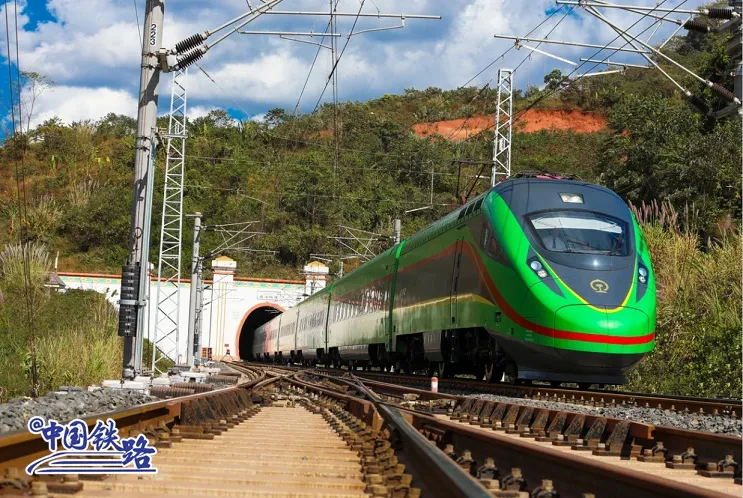
Fuxing train on the China–Laos Railway. Representative train photograph; check your selected service.
Read the timetable for your travel date
A Vientiane to Kunming timetable needs two clocks: Laos local time for departure and China local time for arrival. It also needs a specific date, train and destination station. An old screenshot or a guide that names one daily train is not enough to establish today's service. Begin with the available journey for your date, then use the issued ticket and railway notices to confirm the details.
The one-hour difference changes the calculation
Laos uses UTC+7 and China uses UTC+8, so China is one hour ahead. When a timetable displays each station's local time, subtracting the two clock readings directly adds an hour that you have not spent travelling. Compare the times in one time zone before calculating the elapsed journey.
| Timetable item | What to check |
|---|---|
| Departure from Laos | Travel date and Laos local time, UTC+7 |
| Arrival in China | Arrival date and China local time, UTC+8 |
| Elapsed journey | Convert both times to the same time zone, then subtract |
Calculation example only, not a train schedule: if a train left Laos at 08:00 and arrived in China at 18:00 on the same date, its elapsed time would be nine hours. The departure is 09:00 on the Chinese clock. A return journey must be converted in the opposite direction; also check whether the arrival falls on a different calendar date.
Five details to copy from the selected service
- Date and direction: confirm that you are viewing Vientiane to Kunming, rather than the return or a domestic journey.
- Train number: use the number attached to your selected date. Do not copy a historical train identifier into your travel plan.
- Exact stations: check the departure station in Vientiane and the precise arrival station in Kunming.
- Local departure and arrival times: keep the time-zone labels in your notes and calendar.
- Ticket status: distinguish a search result, an advance request and a ticket that has actually been issued.
Start with the train search and read the selected service's details. If a date is not open for sale, that is not proof that the railway will never operate on that date. Conversely, an illustrative timetable is not proof that a seat is available.
Build station time around the departure
The published international rules require a paper ticket and the original passport used for booking. Arrange collection at a designated point and follow the seller's collection instructions; do not assume a domestic QR code or a booking receipt is enough for cross-border boarding. Add collection and security time before the train's departure, and follow the station's stated boarding deadline.
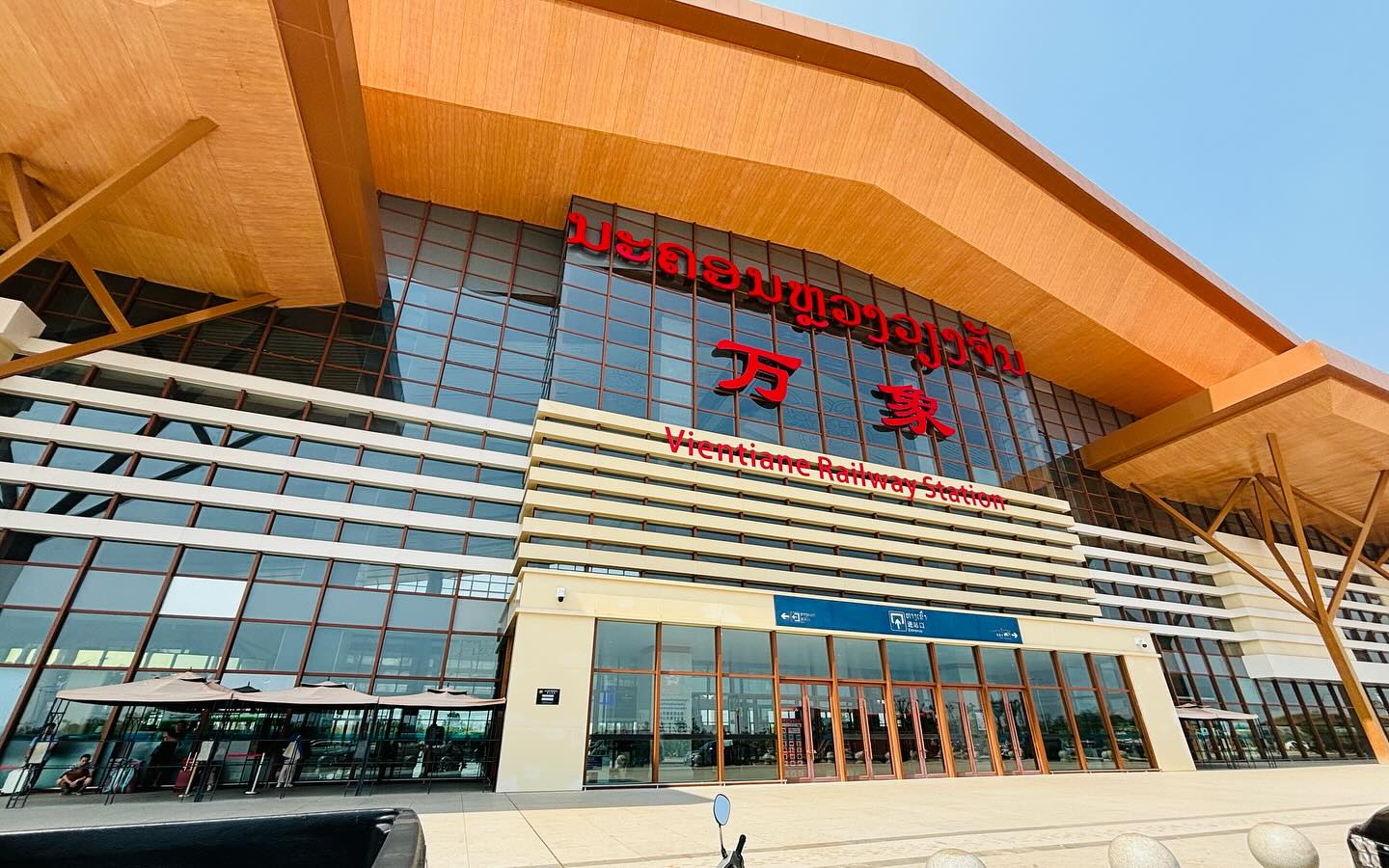
The passport and international booking guide covers these steps. For local transport, use the Vientiane Railway Station guide. A Bangkok connection arrives at Khamsavath, which requires a road transfer to the Laos–China Railway station rather than simply walking to another platform.
Keep connections separate from train running time
A listed arrival is not the time you will reach a hotel, airport or another railway station. Allow for station exit, baggage handling, local transport and delays. For a connection in Kunming, save the exact arrival station and the next departure's station name; two trains serving the same city need not use the same building.
If a prior journey from northern Laos feeds into your itinerary, check it independently. The Luang Prabang to Vientiane route is a separate booking, with its own service and arrival time. If arriving from Thailand, the Khamsavath station guide helps you plan the transfer; consider an overnight stop when the connection would otherwise be tight.
Check release dates and entry documents
The official international passenger rules specify a 15-day sales period. China-origin international services are sold through 12306 or designated Chinese counters; Laos-origin services use LCR Ticket or designated Lao counters. Actual availability, station collection arrangements and any changes must be checked for the selected journey.
A timetable does not confirm immigration eligibility. Check China's current requirements for your passport before booking. If your itinerary returns to Laos, the official Lao eVisa page lists Boten Railway Station as an accepted port for eligible applicants. Obtain approval in advance when required and carry the printed approval letter with the matching passport.