Entering Laos by Train with an eVisa: Boten and Khamsavath
Cover: Laos railway travel. Illustrative archive image; not a visa document or a checkpoint identification guide.
Using a Laos eVisa by train requires the correct railway checkpoint. If you are crossing into Laos on a rail journey and plan to use a Lao eVisa, the two checkpoints that matter are Boten Railway Station on the China–Laos border and Khamsavath Railway Station in Vientiane on the Thailand–Laos route. Both appear on the official list of designated eVisa ports, so an approved eVisa can be presented there for a tourist, single-entry admission of up to 30 days. What it cannot do is admit you to China or Thailand, replace your passport, or guarantee that an immigration officer will let you in — final admission always rests with Lao immigration. This LaosTrain guide explains exactly what to carry on border day, how Boten rail differs from the Boten road checkpoint, how Khamsavath differs from Vientiane Railway Station, and what to do when plans change.
Can I use a Laos eVisa by train at Boten and Khamsavath?
According to the official Lao eVisa information page (laoevisa.gov.la/info) and the official FAQ (laoevisa.gov.la/faq), the eVisa is a tourist visa issued for a single entry, allowing a stay of up to 30 days, with entry validity of up to 60 days after you receive the approval letter. The FAQ further states that travellers may enter at any designated eVisa port — and Boten Railway Station and Khamsavath Railway Station are both included among the nine designated ports.
Three practical points follow immediately:
- Non-designated borders do not accept the eVisa. If you arrive somewhere that is not on the designated list, you cannot use an eVisa there. The full list is maintained on our Laos eVisa entry ports page.
- Print the approval letter. A clear black-and-white printout is acceptable, provided the QR code remains readable.
- Use the same passport. The passport you travel with must be the one used in the application.
Choosing the right checkpoint: China route vs Thailand route
Similar station and checkpoint names can lead to the wrong travel plan. Confirm the exact entry point before booking.
Boten Railway Station vs the Boten road checkpoint
Both sit in the Boten border area, but they are not interchangeable in practice. A rail arrival is processed at the railway border facilities connected to the station, while a road arrival is processed at the road checkpoint used by buses, cars and minivans. If your itinerary is rail-based, plan for the railway station. If you are being dropped by road transport, plan for the road checkpoint. Confirm which one your carrier actually uses before you pay, and check it against the official designated-port list (official FAQ).
Check the international train itinerary and ticket instructions rather than assuming how boarding, immigration or onward connections work. A visa approval and a train ticket serve different purposes. For the cross-border booking checklist, see our Vientiane–Kunming train booking guide.
Khamsavath vs Vientiane Railway Station
The similar city names can obscure two different stations. Read the station name on each leg of your itinerary.
- Khamsavath Railway Station (Vientiane) is the international arrival point for cross-border services from Thailand and is on the designated eVisa port list. Immigration is completed here.
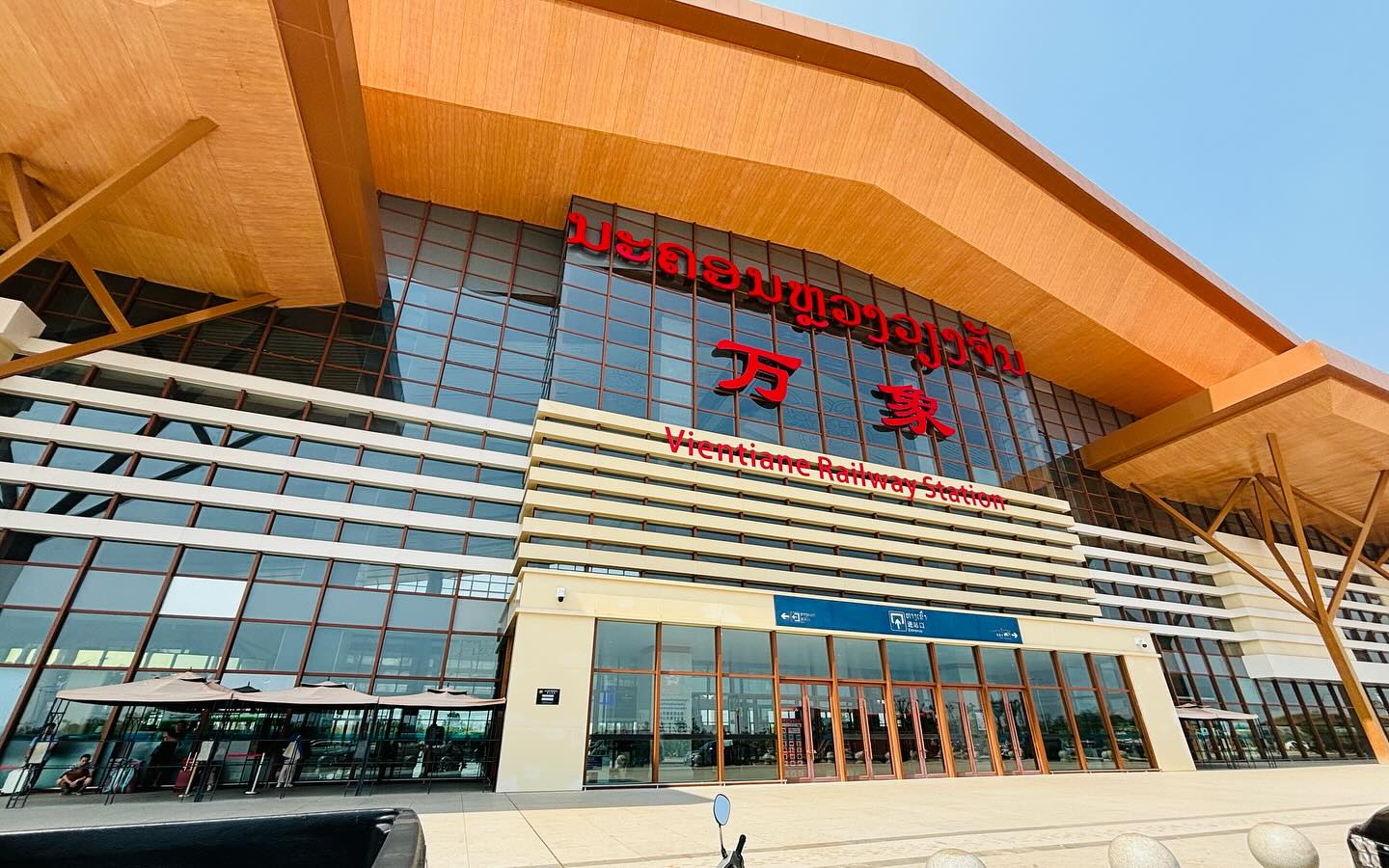
- Vientiane Railway Station serves the Laos–China Railway, including domestic services toward Vang Vieng and Luang Prabang. It is a different station from Khamsavath. Taking a domestic train after entry does not replace border immigration.
In other words: your Lao entry happens at Khamsavath, not later at a domestic station. Station details are covered in our Khamsavath Railway Station guide.
Two more boundaries to keep clear. A Lao eVisa does not authorise entry to Thailand or China — you need whatever those countries require, applied for separately. And if you exit Laos and later return, a single-entry eVisa is used up; you would need a new authorisation.
Border-day checklist
Work through this list the night before and again at the platform.
| Item | What to check |
|---|---|
| Passport | Ordinary passport, valid for more than 180 days from your arrival date, per the official requirements (official FAQ). |
| Printed approval letter | Paper copy carried with you. Black-and-white is acceptable if the QR code is readable. |
| Matching details | Name, passport number and nationality on the letter must match the passport exactly. Use the same passport to apply and to travel. |
| Correct port | Boten Railway Station or Khamsavath — both designated. Any other, non-designated border will not accept the eVisa (FAQ). |
| Children | Every child who needs a visa requires their own application details. Check current exemptions for your nationality before assuming anything. |
| Onward planning | Keep flexible onward arrangements in case of delay, refusal, or a wrong-checkpoint mistake. |
Itinerary examples for rail arrivals
Example 1: China to Laos by rail
- Apply for the eVisa well in advance and receive the approval letter by email.
- Print the letter and pack it with the same passport used for the application.
- Confirm Boten Railway Station as the Lao entry checkpoint for your international train. Follow the train staff’s and immigration officers’ instructions for leaving the train, carrying documents and reboarding.
- Present passport and printed approval letter. Admission is decided by the officer on the day.
- After immigration clearance, continue according to the international ticket and any separate onward booking. Do not assume the visa requires a change to a domestic train.
Example 2: Thailand to Laos by rail
- Confirm that your service terminates at or connects through Khamsavath Railway Station, the international arrival point.
- Complete Lao immigration at Khamsavath with passport and printed letter.
- If continuing toward Vang Vieng or Luang Prabang, arrange a separate road transfer to Vientiane Railway Station and check the onward train’s boarding instructions. Allow for immigration, traffic and delays.
- Arrange your Thai exit formalities separately; a Lao eVisa does not cover Thailand.
Contingencies: wrong checkpoint, changes and visa on arrival
- Wrong checkpoint. An eVisa cannot be used at a non-designated border. Before travelling, change the itinerary to a designated port or confirm an alternative lawful entry arrangement with the relevant Lao authority. Do not assume visa on arrival is available.
- Changed travel dates. Once approved, use the entry-validity dates on the letter. The FAQ allows entry on a date within that validity; the original application window and the issued letter’s validity are different checks.
- Changed passport. The official rule requires the passport used to apply. Contact the service handling your application before travelling or submitting again; do not assume an approval automatically transfers to a replacement passport.
- No approval letter in hand. A payment receipt is not the approval letter. Check the application status with the service you used and confirm an alternative with the relevant authority if travel is imminent. Do not board relying on an unverified visa-on-arrival assumption.
- Final decision. Even with a complete, valid eVisa, admission is granted at the discretion of Lao immigration officers.
Next step
Match the checkpoint on your itinerary to the accepted entry ports, prepare the passport and photo documents, and check your approval-letter dates before travel. If you still need to apply, compare the official portal with our independent Laos eVisa service. Check China or Thailand’s entry rules separately for any later crossing.
This is independent LaosTrain guidance, not an official government website. Facts checked 15 October 2026. Official information is published at laoevisa.gov.la/info and laoevisa.gov.la/faq. Admission to Laos is decided by immigration officers at the border.